Drywall in a basement is not the same product decision as drywall upstairs. Below-grade conditions bring higher humidity, cooler surface temperatures, and greater risk of incidental moisture. The right drywall spec, insulation strategy, and finish process protect the whole basement finish for years to come.
Why Basement Drywall Requires Special Consideration
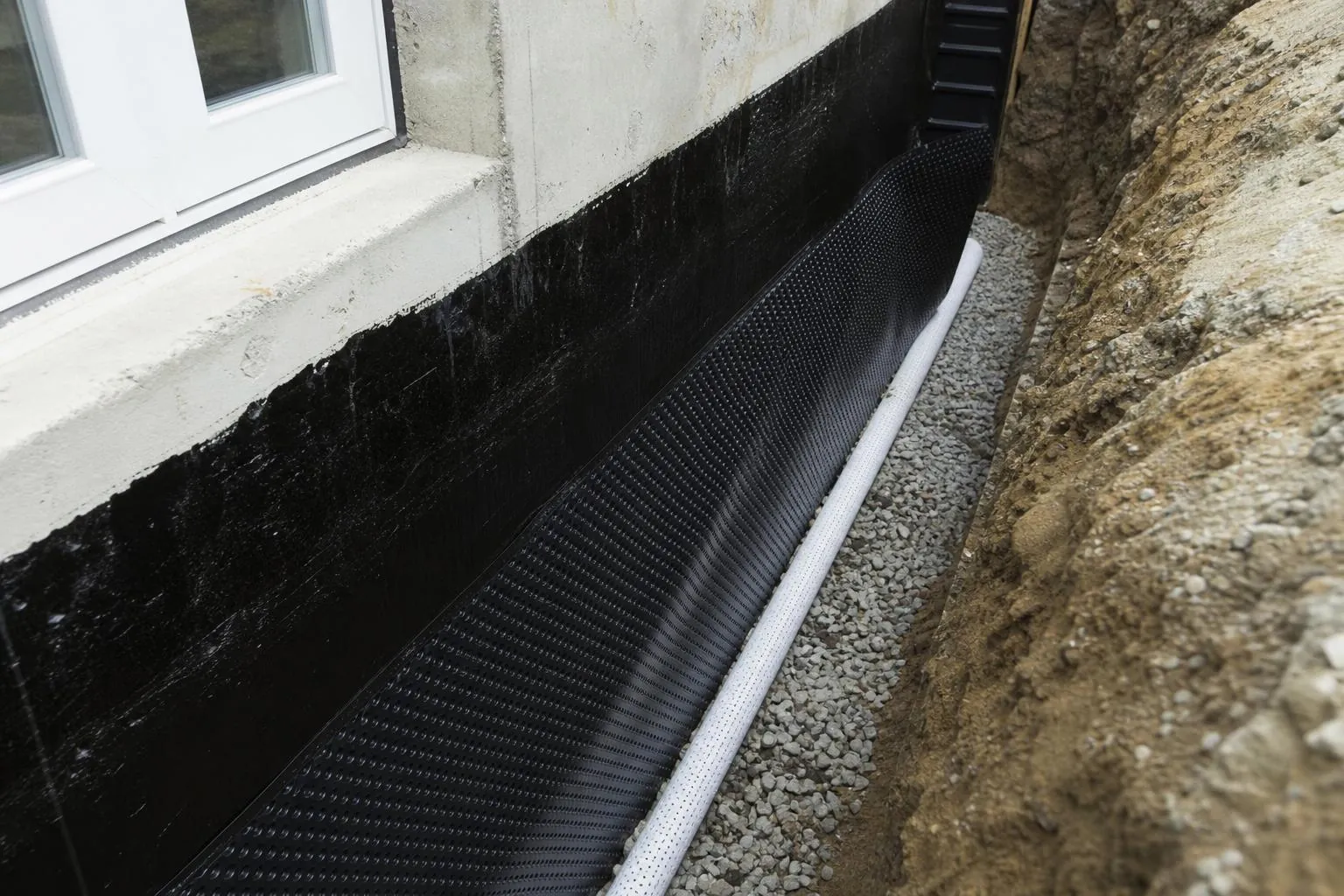
The wall behind basement drywall is either an exterior foundation wall or a stud wall against one. Foundation walls sit in cool, damp soil year-round. That temperature and moisture differential is what creates condensation risk, and condensation trapped behind standard paper-faced drywall is what feeds mold.
What Drywall to Use Where
Perimeter walls (against foundation)
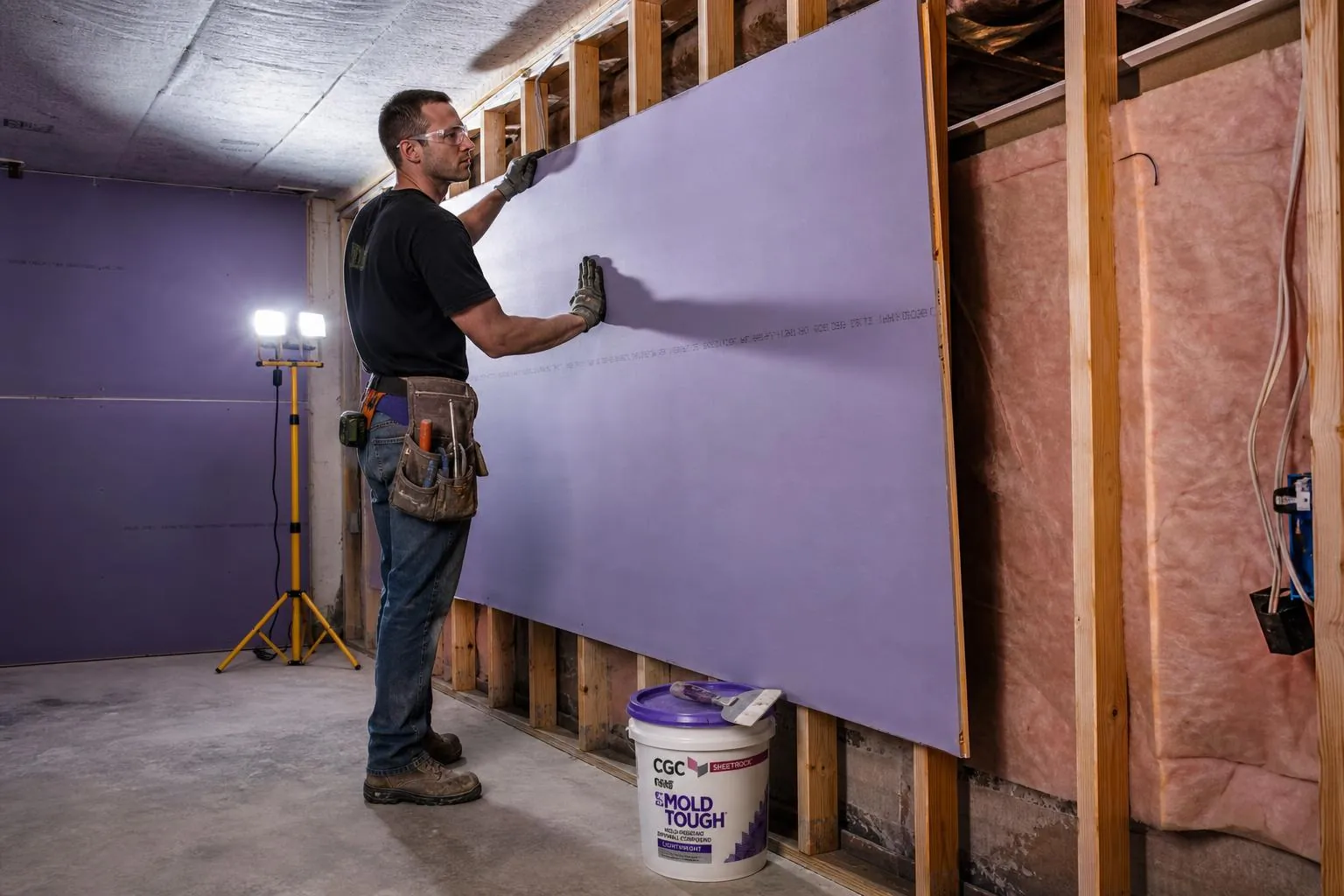
Use paperless mold-resistant drywall on any stud wall that sits against a foundation wall. Common brands include DensArmor and Mold Tough. The gypsum core is the same, but the facing is fiberglass instead of paper, so there is nothing for mold to feed on if any moisture reaches the wall.
Bathrooms and laundry rooms
Use cement backer board behind tile in wet areas. Use paperless mold-resistant drywall on the remaining walls. In steam-heavy areas, upgrade to a proper waterproof membrane behind the tile as well.
Interior partition walls
Standard drywall is fine on interior partition walls that are not adjacent to a foundation wall or a wet area. Save the mold-resistant product for where it actually earns its cost.
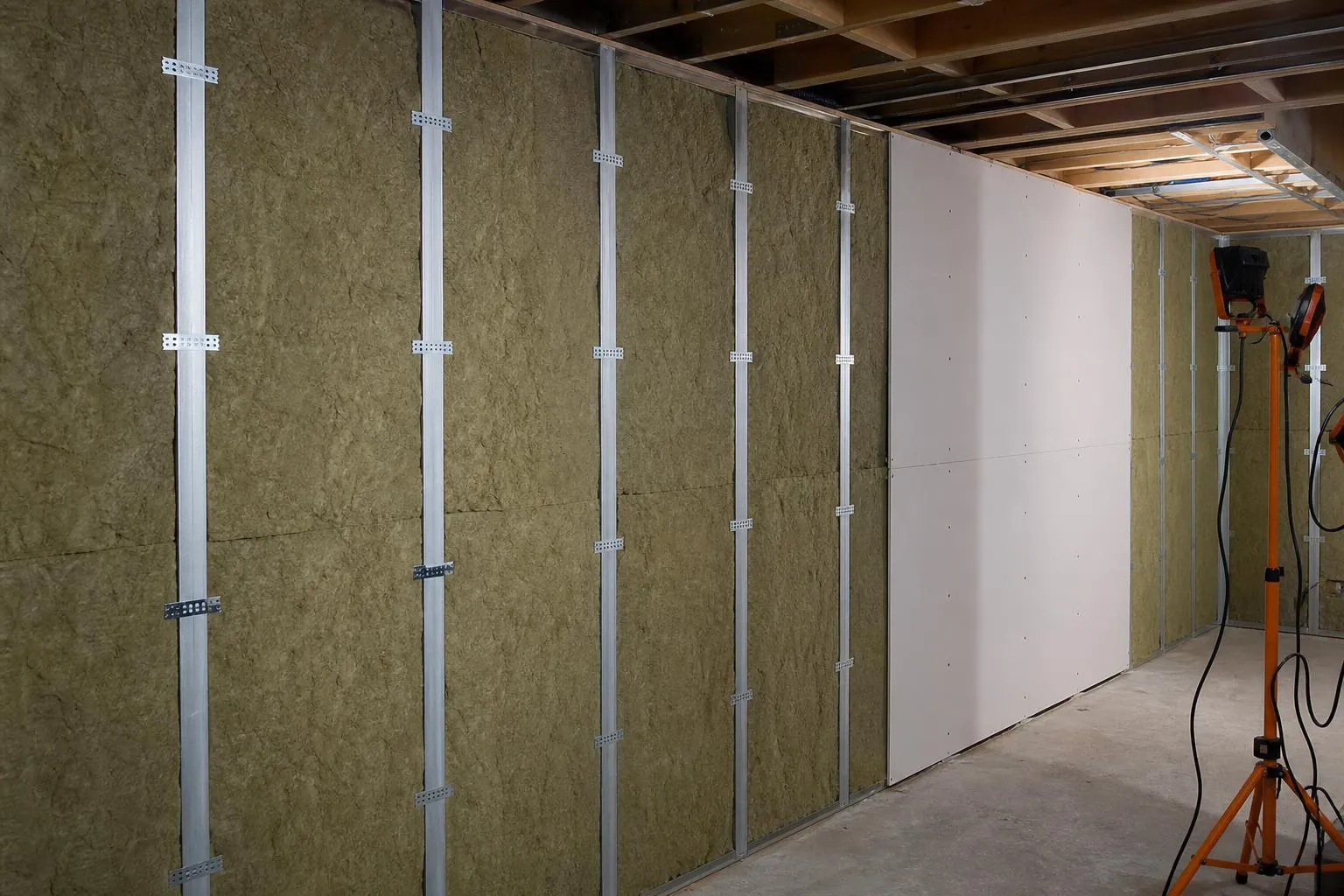
The Right Wall Assembly
- Rigid foam insulation directly against the foundation wall
- A stud wall an inch or two off the foundation, not against it
- Batt or continuous insulation in the stud bays
- Vapor management appropriate to your climate zone
- Paperless mold-resistant drywall on the finished side
Finish Quality Still Matters
Choosing the right board is only half the job. The taping, mudding, sanding, and priming all need to match the quality of the rest of the home. A basement finished with mold-resistant drywall but a level-2 finish will look like a garage. Insist on a level-4 finish (or level 5 in raking-light conditions) and quality primer before paint.
CS Remodeling handles basement finishing, kitchens, bathrooms, and drywall across the Denver metro area. Get a free estimate and we'll walk through your project honestly.
Contact Us