A basement room without sound treatment can feel loud in one direction (footsteps and voices from upstairs) and echoey in the other (hard walls and floors). A few targeted upgrades during the finish stage make a huge difference in how the space feels day-to-day.
Understand What You Are Trying to Block
Sound in a basement comes from three sources: airborne sound from the floor above (voices, TV), impact sound through the floor above (footsteps, dropped items), and sound generated in the basement itself that bounces around the hard surfaces. Each source needs a different fix.
The Ceiling: Where Most Basement Noise Enters
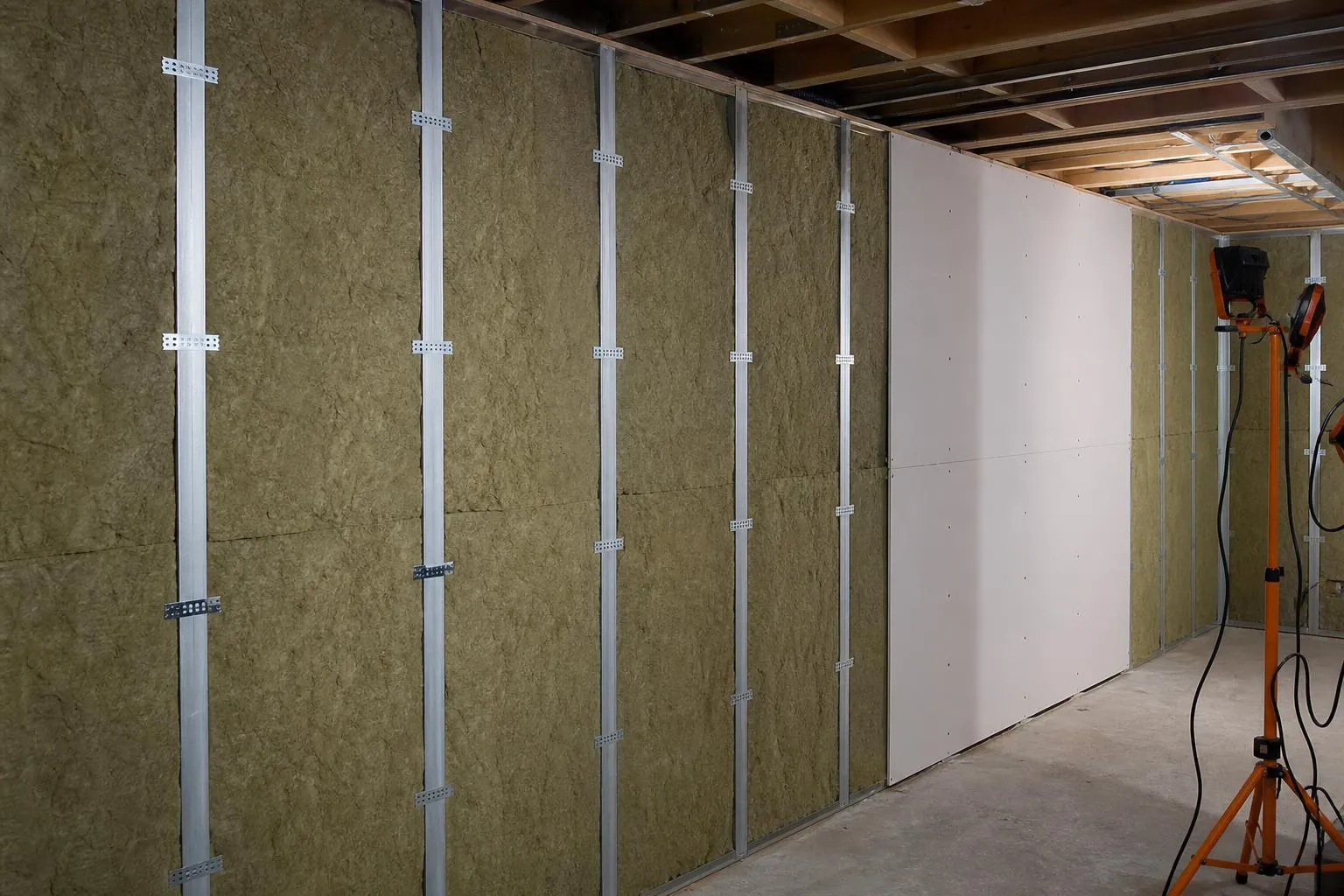
- Add rock wool or mineral wool batts in the joist bays
- Install resilient channel or sound isolation clips on the joists
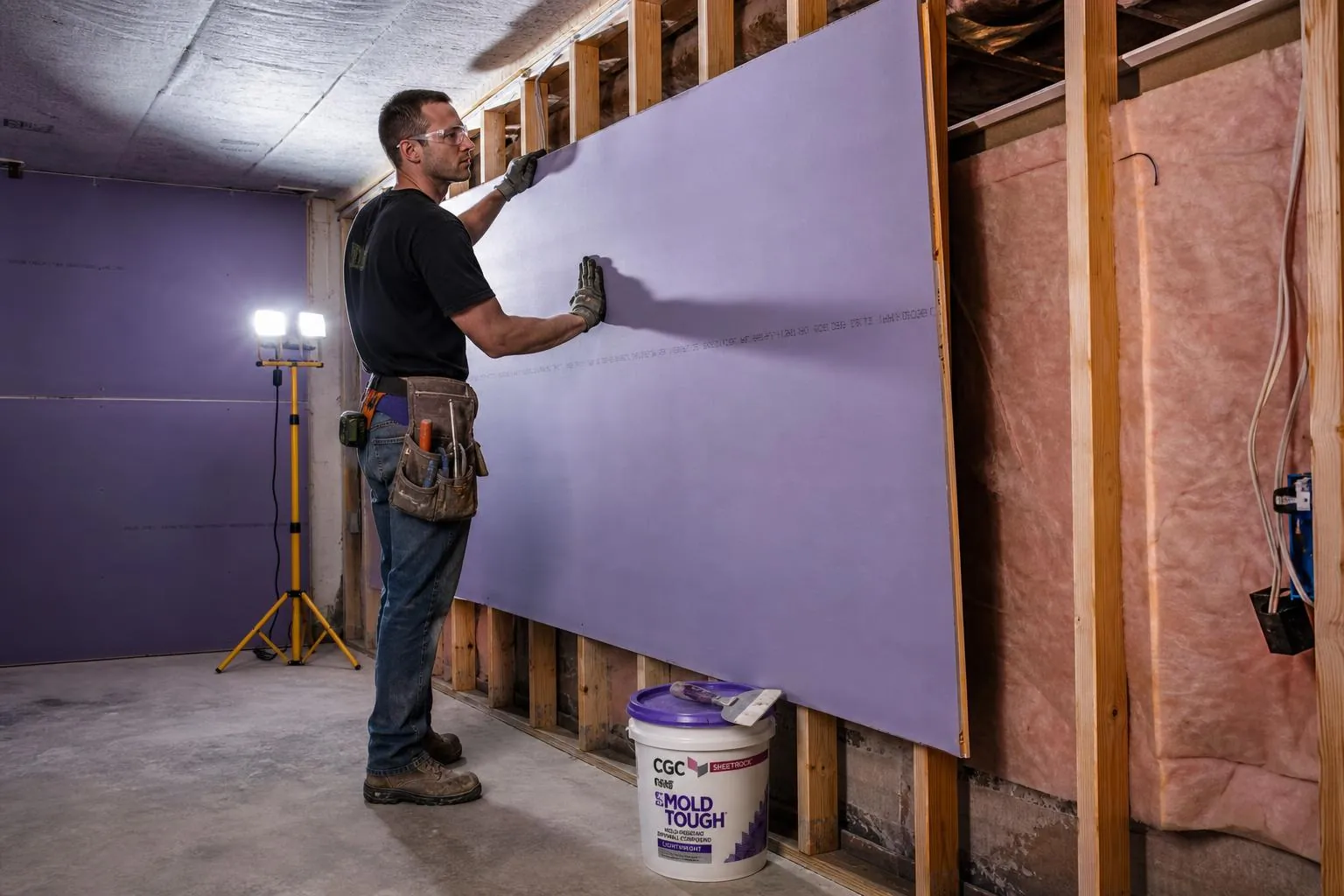
- Use two layers of 5/8-inch drywall with a damping compound between them
- Add area rugs upstairs to reduce impact sound at the source
The Walls: Contain Sound Within Rooms
- Insulate every interior partition, not just exterior walls
- Use solid-core doors, not hollow-core
- Seal the gap under every door with a door sweep
- Double up drywall in shared walls between a media room and a bedroom
Inside the Room: Tame the Echo
Once you have kept sound in or out of the room, the last step is treating the sound that gets generated inside. Soft furniture, an area rug, a bookshelf on the biggest empty wall, and one or two acoustic panels behind the primary listening or viewing position cover 90 percent of what most people need.
Where the Bigger Investment Is Worth It
For a dedicated theater room, a music room, or a home office that shares a wall with a family room, spend the extra on a proper isolation-clip ceiling assembly and double-drywall walls. For a typical family room or guest bedroom, insulation and solid-core doors are usually enough.
CS Remodeling handles basement finishing, kitchens, bathrooms, and drywall across the Denver metro area. Get a free estimate and we'll walk through your project honestly.
Contact Us