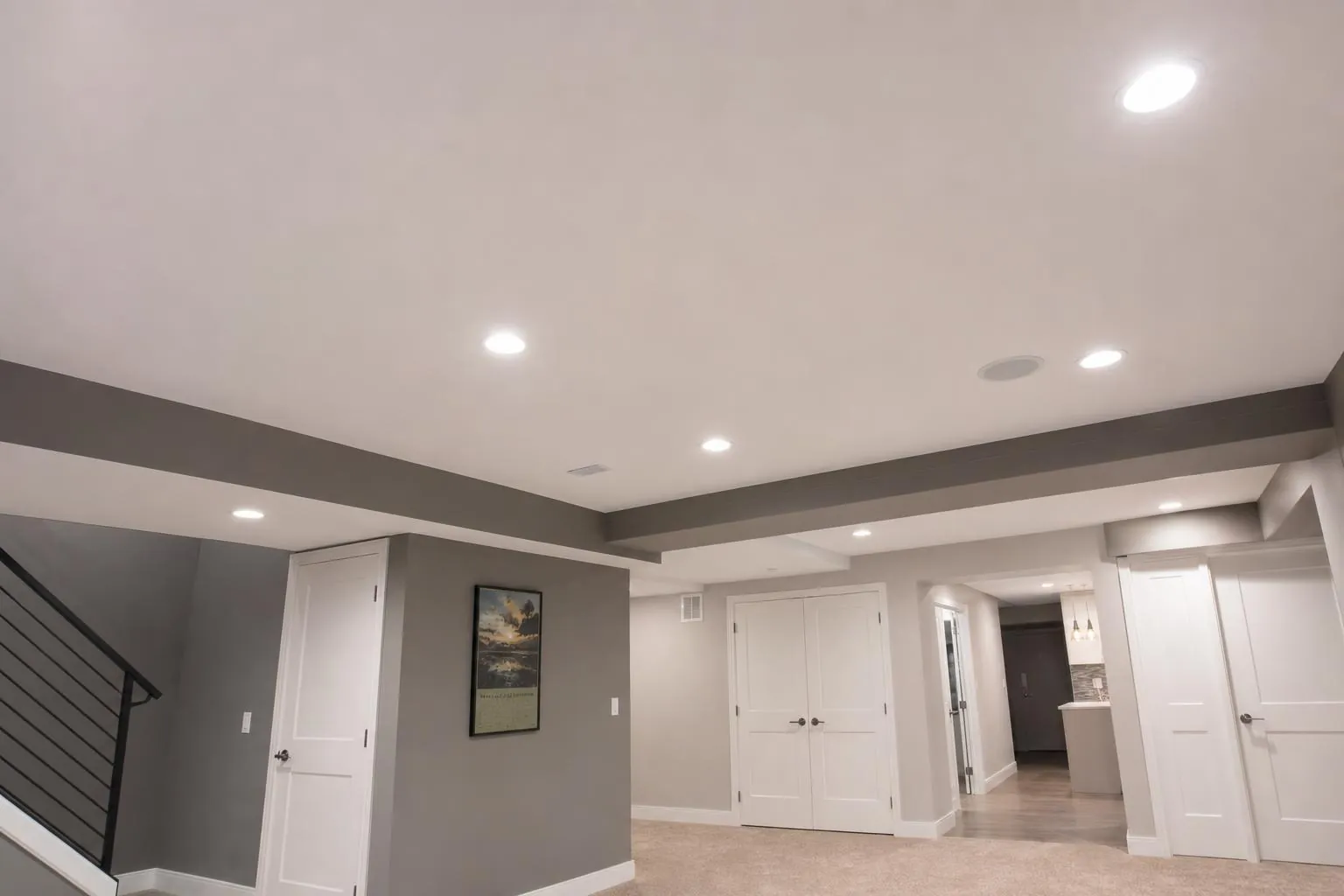
The ceiling is one of the biggest visual and practical decisions in a basement finish. Drywall, drop tile, and exposed painted joists each have real trade-offs on cost, ceiling height, access, and how the finished space feels.
The Three Main Basement Ceiling Options
Drywall ceiling
A drywall ceiling gives you a clean, finished look that reads the same as the ceilings upstairs. It is the most popular option for basements built as full living space. The downside is access: any plumbing, wiring, or HVAC repair means cutting into the drywall. Plan for strategic access panels above shutoff valves and cleanouts.
Drop ceiling (suspended ceiling)
A drop ceiling uses lightweight tiles set into a metal grid suspended a few inches below the joists. It gives you complete access to everything above with no drywall repair. Modern drop tiles look far better than the yellow-stained ones from the 1970s, but the space will still feel more utilitarian than a drywall ceiling.
Exposed painted ceiling
Painting the joists, ductwork, and wiring the same dark color and leaving everything exposed is popular in urban and industrial-style basements. It preserves every inch of ceiling height, which matters in older Denver homes with lower basements. The install is fast, but it takes careful painting and tidy mechanical work to look intentional rather than unfinished.
How to Choose Between Them
- For a family living space that should feel like the rest of the home: drywall.
- For a workshop, laundry, or storage-heavy space: drop ceiling.
- For an entertainment or lounge space with limited ceiling height: exposed painted.
- For a mixed-use basement: use different treatments in different zones.
CS Remodeling handles basement finishing, kitchens, bathrooms, and drywall across the Denver metro area. Get a free estimate and we'll walk through your project honestly.
Contact Us