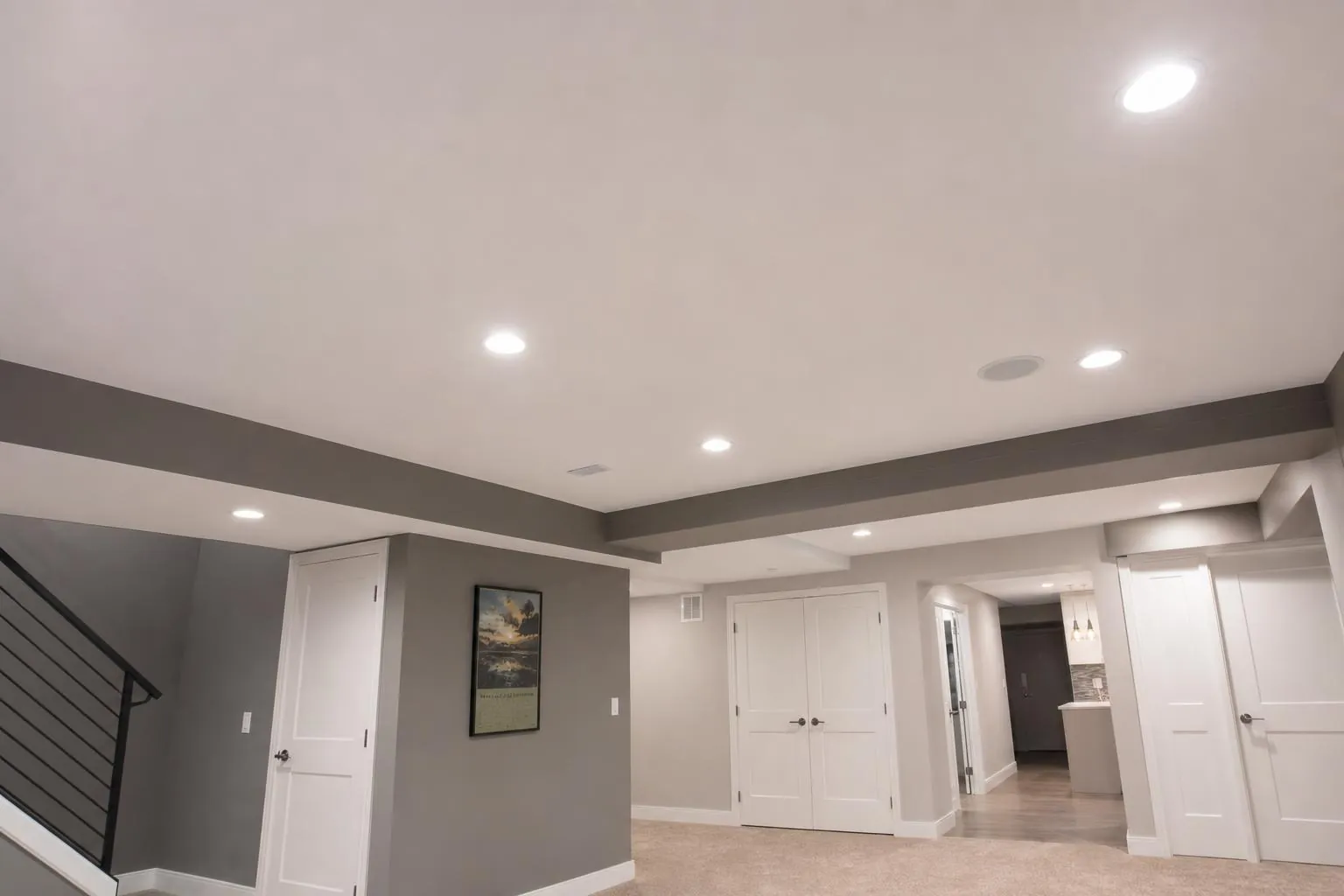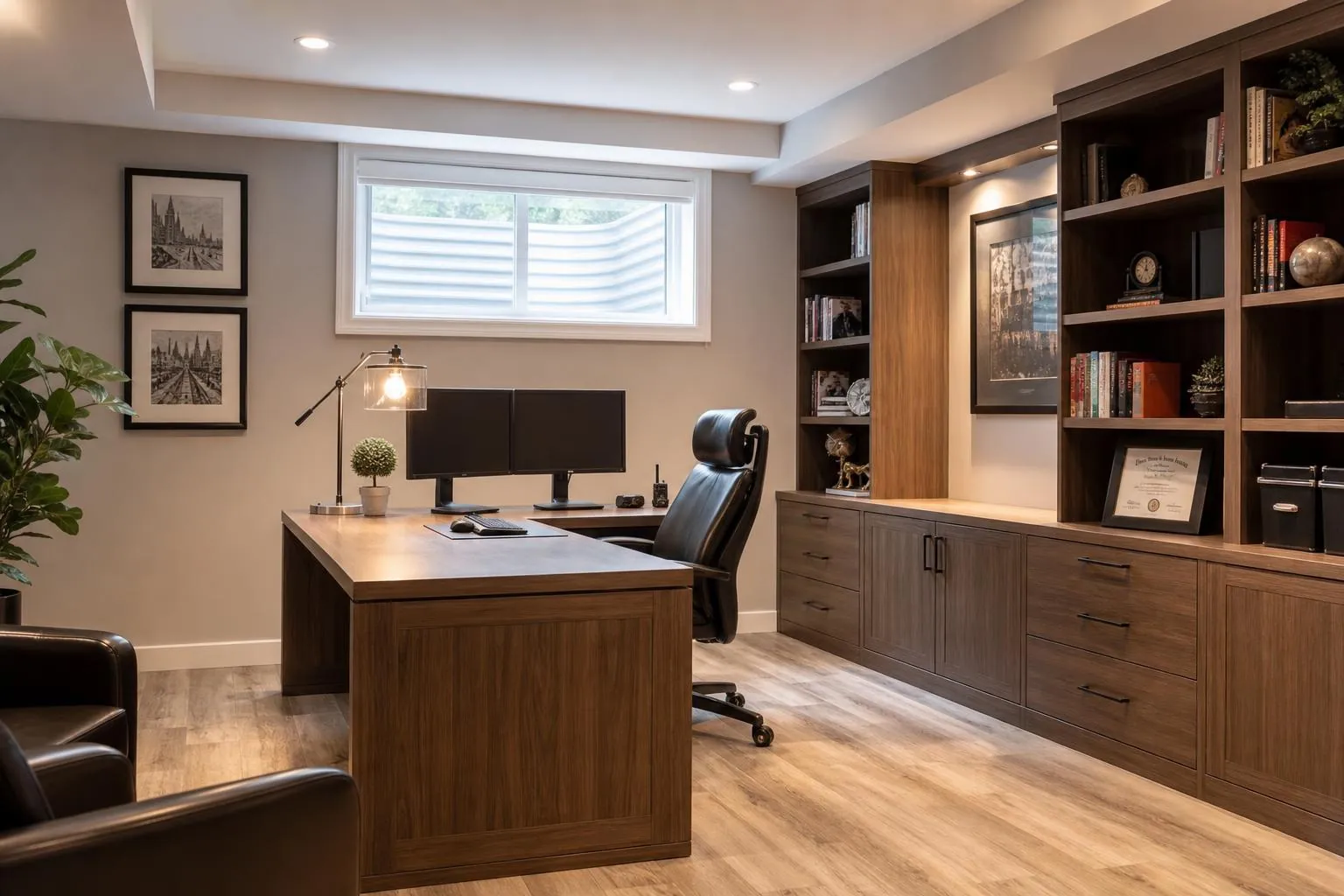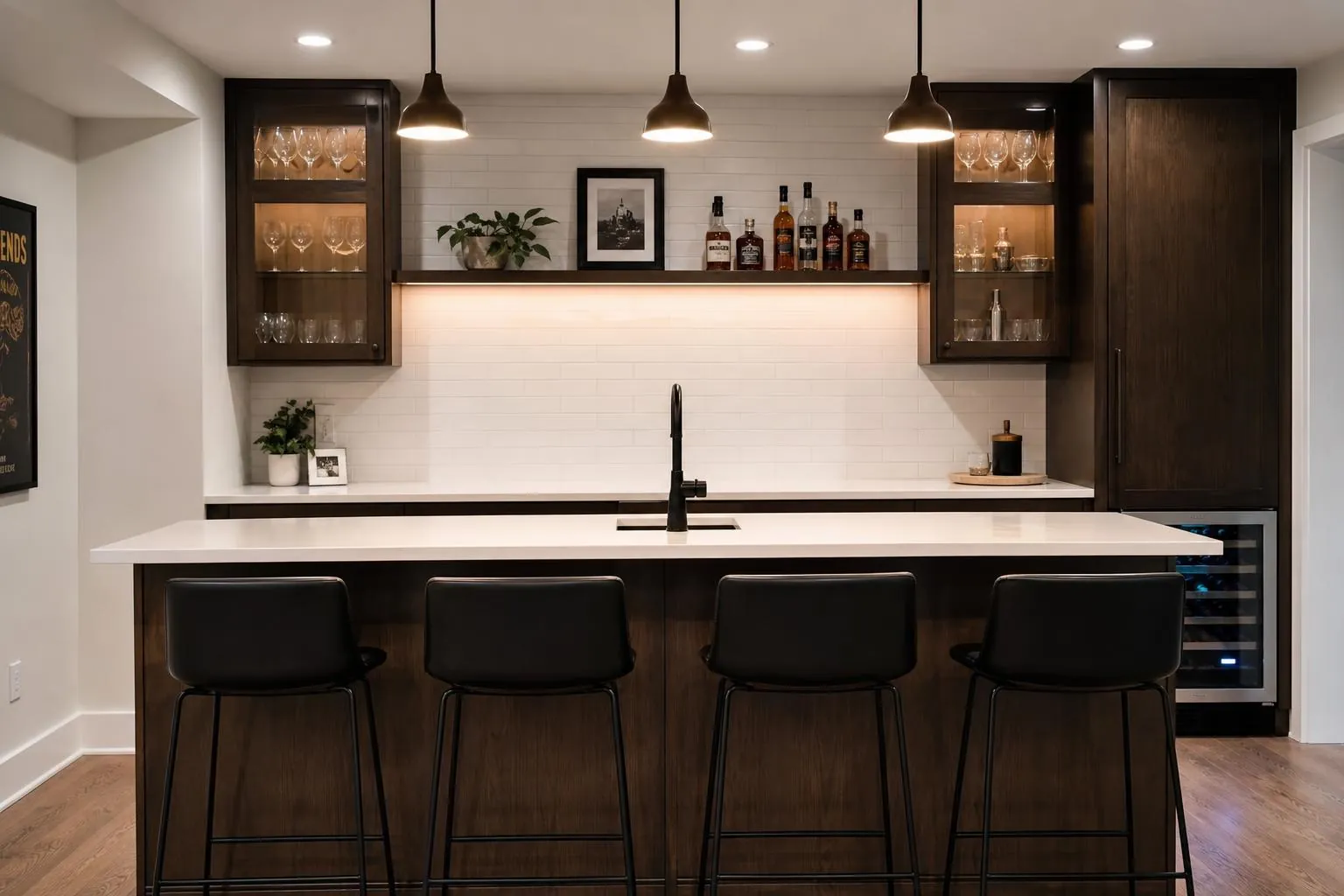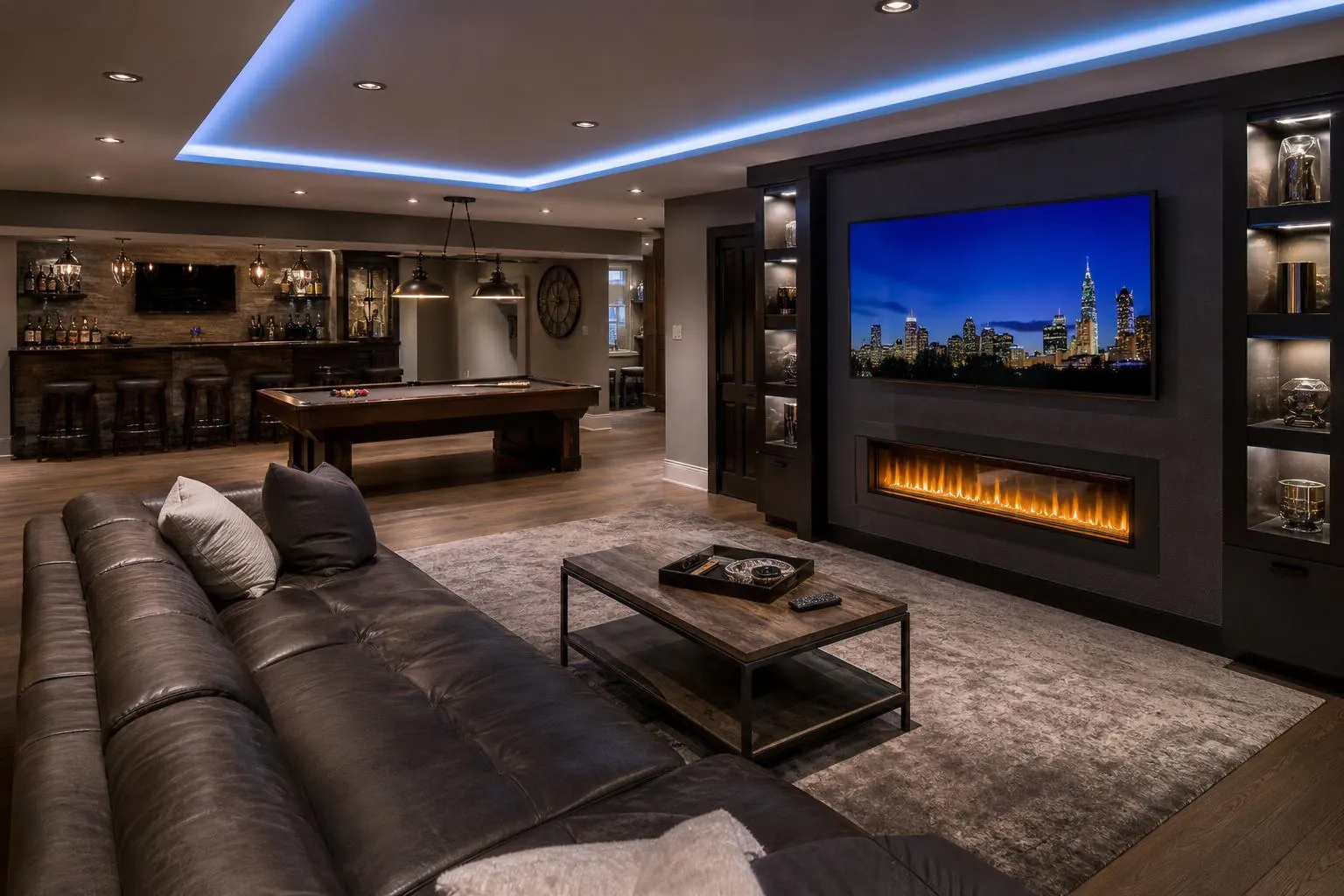
Flooring choices that work perfectly on a main level can fail in a basement because of moisture, temperature, and the concrete slab underneath. Here are the flooring options that actually hold up long-term in Colorado basements.
What Makes Basement Flooring Different
The slab is always cooler than the room above it, which means there is always some moisture vapor moving through it. The right basement floor either tolerates that moisture (LVP, tile) or is separated from the slab with a proper subfloor and vapor break (engineered hardwood, carpet).
Luxury Vinyl Plank (LVP)
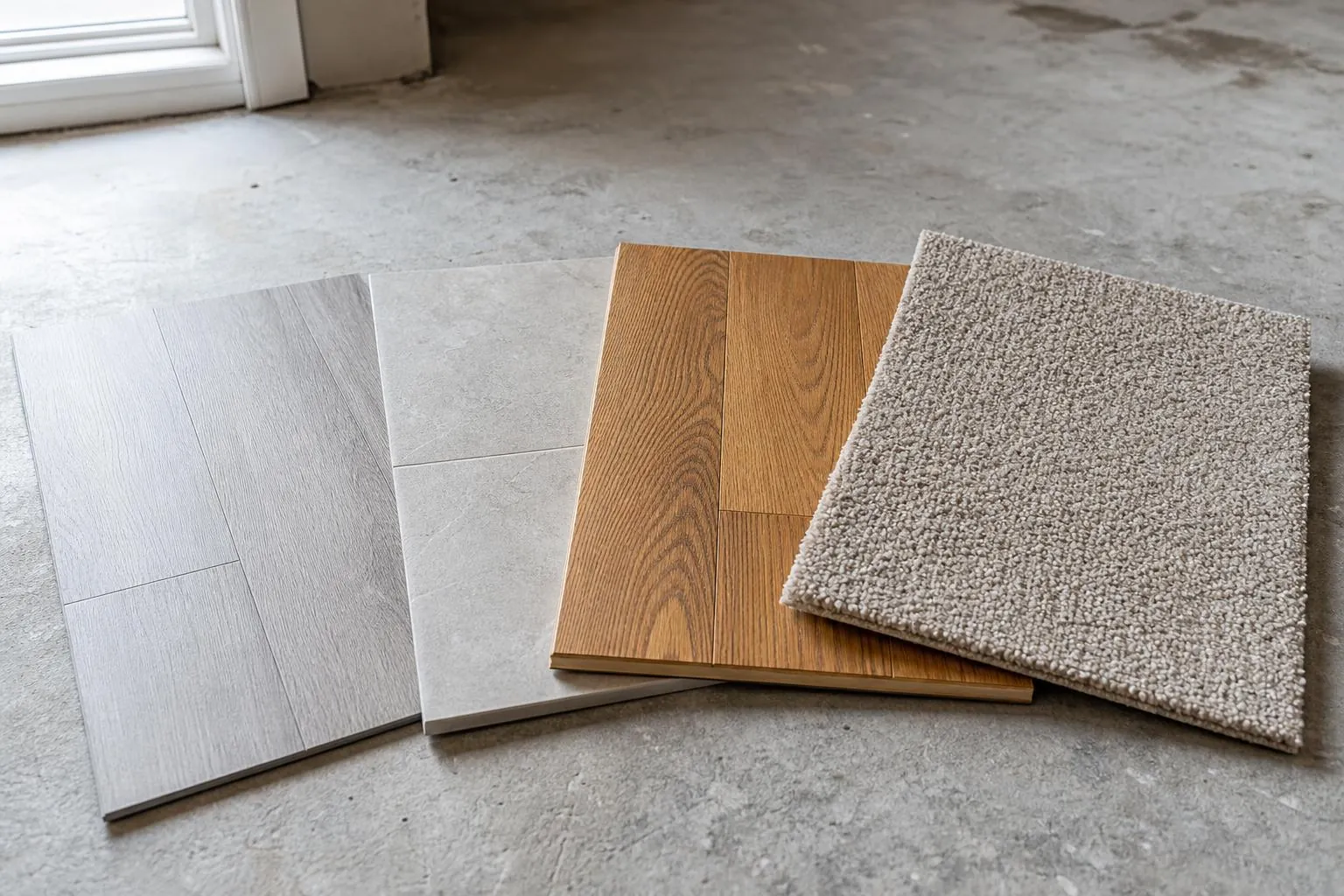
LVP is the most popular basement flooring today for good reason. It is fully waterproof, it looks like wood, it installs directly over a properly prepped slab, and it takes hard use without complaint. Quality LVP with a thick wear layer will last 15 to 25 years in a basement.
Tile
Porcelain or ceramic tile is the most durable basement floor you can install. It handles moisture, wear, and heavy furniture without issue. The downside is that tile is cold and hard underfoot; pair it with an area rug or consider in-floor heating for comfort.
Engineered Hardwood
Engineered hardwood can work in a basement if the slab is dry, a proper vapor barrier is installed, and a floating installation is used. It gives you the look of real wood but at higher cost and higher moisture risk than LVP.
Carpet
Carpet still has a place in basement bedrooms and family rooms where comfort matters. Use a moisture-resistant pad rated for below-grade use, and install a subfloor product like DRIcore first to keep the carpet off the cold slab.
What Not to Install in a Basement
- Solid hardwood (moisture will cup or crown it)
- Standard laminate without waterproof rating
- Carpet directly on unsealed slab
- Any product not rated for below-grade installation
CS Remodeling handles basement finishing, kitchens, bathrooms, and drywall across the Denver metro area. Get a free estimate and we'll walk through your project honestly.
Contact Us